
February 2026 | Sydney, Australia
There are some places you visit because they are famous, and then there are places that mean something to you long before you ever get there. For a cricket fan, the Sydney Cricket Ground belongs firmly in the second category.
I have followed cricket for close to four decades. Over the years, I have watched countless matches, celebrated great innings, felt the disappointment of unexpected collapses, and followed the careers of players who have become legends of the game. The SCG has been part of that cricketing world for as long as I can remember. So, when I had the opportunity to visit it during our Sydney trip in February 2026, I knew this would be more than just another sightseeing stop.
I was also looking forward to sharing the experience with my daughter. A father-daughter trip is always special, and this one gave me the chance to take her into a place that had meant so much to me through years of watching cricket. She might not have spent four decades following the game, but she would get to see where some of its biggest names had played, prepared and made history.
I was excited even before we reached the ground. By the time the tour was over, I had experienced several moments that gave me genuine goosebumps.
Getting to the SCG from Circular Quay
We were staying at the Sydney Harbour Marriott Hotel at Circular Quay, which turned out to be a convenient base for exploring Sydney. One of the advantages of staying there was how easy it was to get around using public transport.
The light-rail stop at Circular Quay was only about a two-minute walk from our hotel. We took the light rail towards Moore Park, which is the stop you want for the Sydney Cricket Ground. From there, it is a short walk to the sporting precinct.
For anyone staying around Circular Quay, I would recommend this route. It is straightforward, avoids the hassle of finding a taxi or dealing with traffic, and gives you a chance to see a little more of the city along the way. Sydney’s light rail connects Circular Quay with the Moore Park area, making it a practical option for reaching the SCG. Transport information is available here.

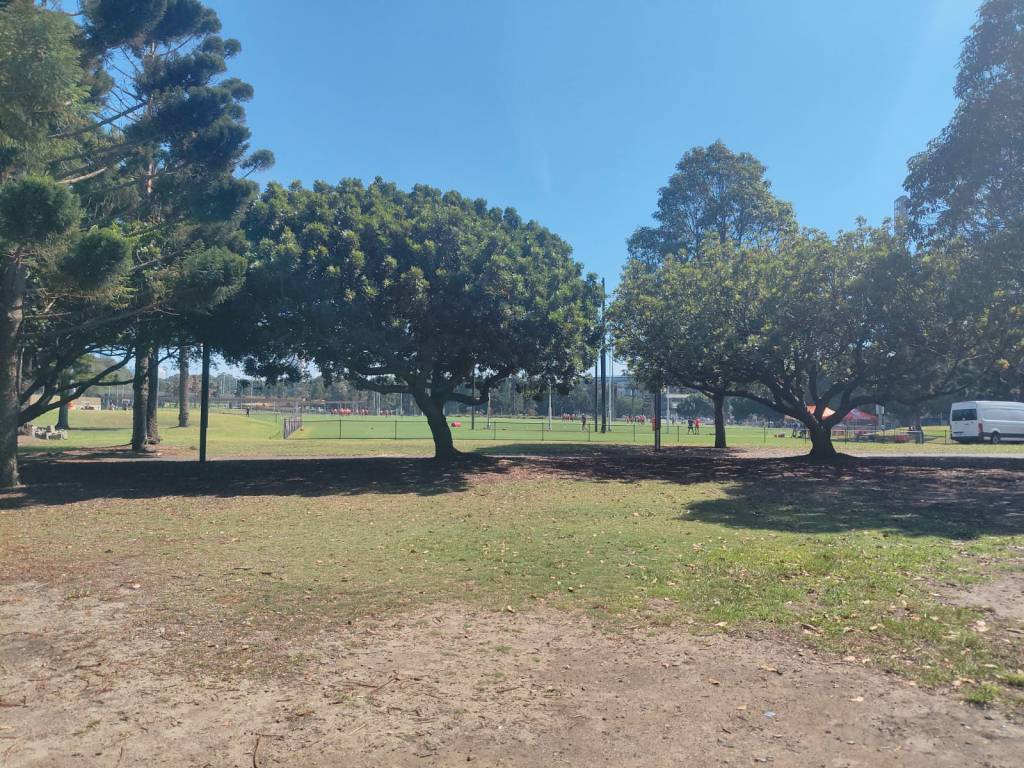
As we approached the ground, the scale of the sporting precinct became more apparent. The SCG is not an isolated stadium surrounded by roads and car parks. It sits within a much larger sporting area, with other venues, open spaces and training fields nearby. The surrounding grounds give the place a distinctly Australian sporting feel.
We made our way towards the tour meeting point, passing the stadium buildings and looking around at the stands and pavilions. Even before the tour began, I was taking in the details. I was finally here.


Walking into cricket history
The Sydney Cricket Ground has a history stretching back to the nineteenth century. The venue hosted its first Test match in 1882, and it has since become one of the most recognisable grounds in international cricket. Over the years, it has witnessed Ashes battles, memorable Test matches, historic individual performances and some extraordinary moments in Australian and international sport. The SCG’s history and its first Test are documented here.
For a cricket follower, those dates and records are not simply facts on a website. They connect the ground to generations of players and matches. The SCG is a place where the past is visible in its architecture, its displays, its records and even the way the different parts of the stadium fit together.
Our guided tour gave us access to areas that ordinary spectators would not usually see when attending a match. We were not just looking at the ground from the stands. We were being taken through the spaces in which players prepare, officials work and the game comes together behind the scenes.
One thing I particularly enjoyed was the group itself. Everyone on the tour seemed to have a genuine interest in cricket. We got talking to an Australian family from Melbourne and an English family. It did not take long for the conversation to turn to cricket, players and the different connections each of us had with the game.
That was one of the unexpected pleasures of the visit. Here we were, people from different countries, with different accents and different cricketing loyalties, chatting as if we had known one another for years. Cricket gave us an instant connection. There was no need for much introduction or small talk; we already had something important in common.
It was a lovely reminder of how sport can bring people together, even when they support different teams. And there was something fitting about experiencing that at a ground where Australia, England, India and many other cricketing nations have shared so much history.


The Members Pavilion and the old-world character of the SCG
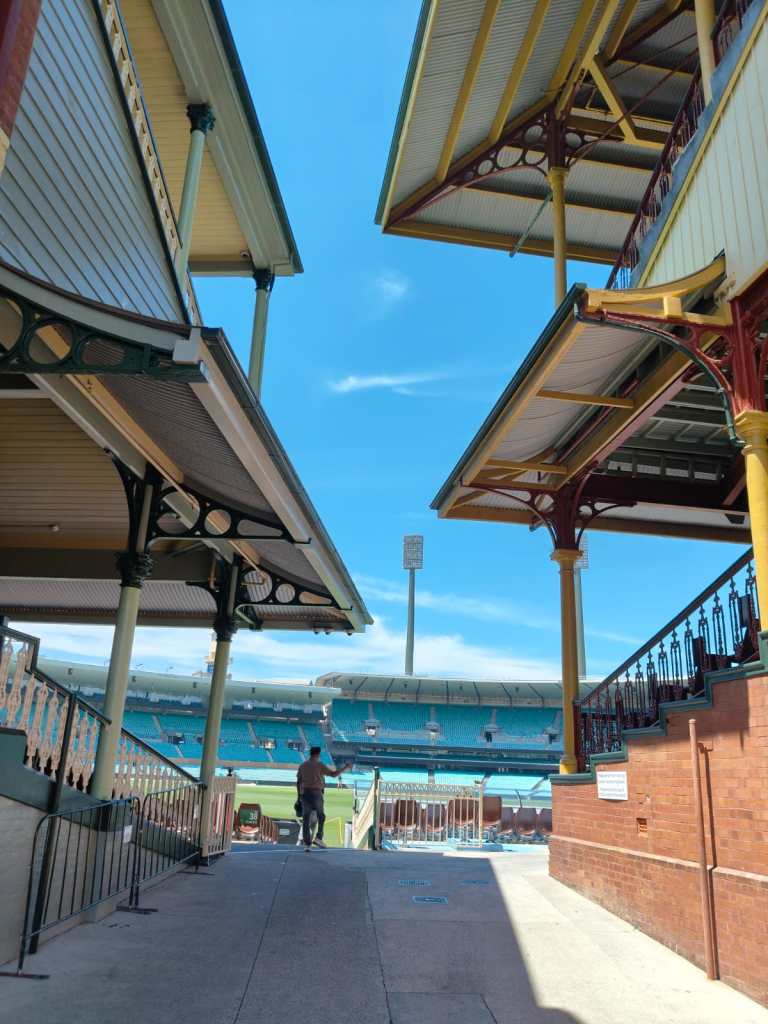
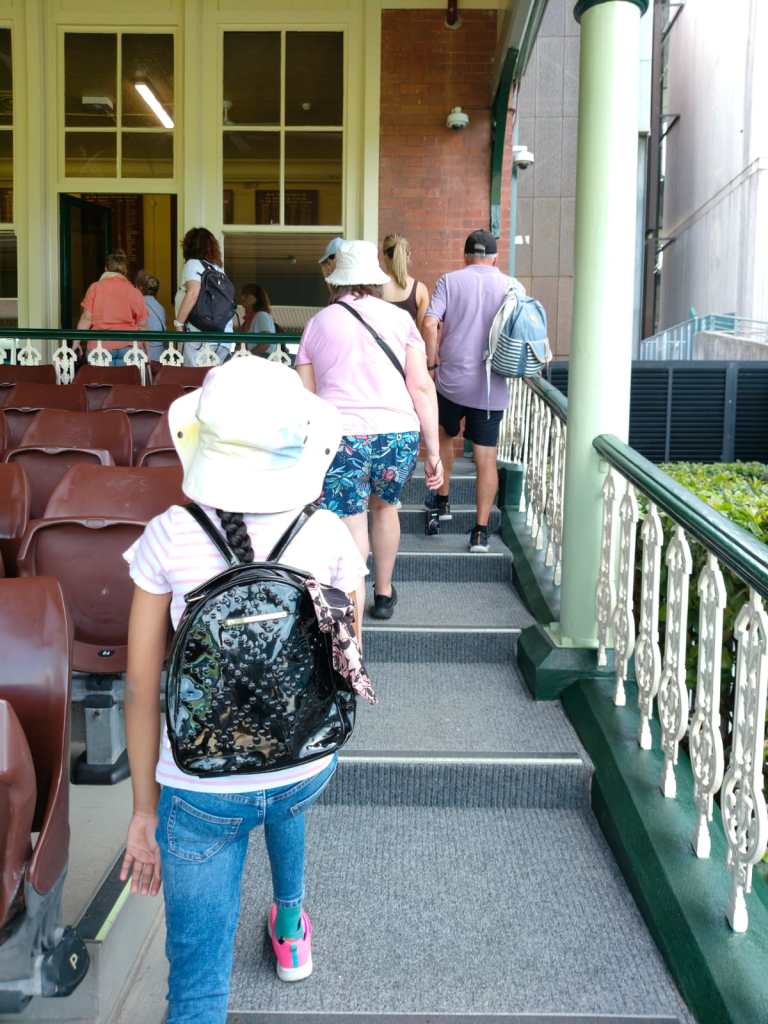
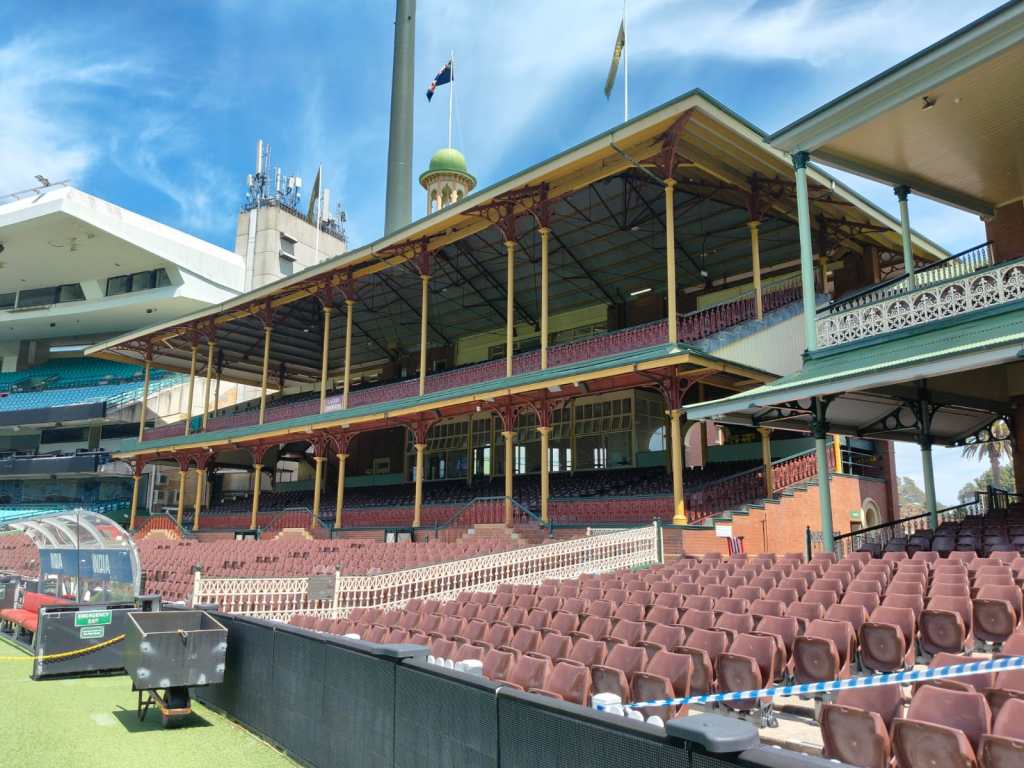
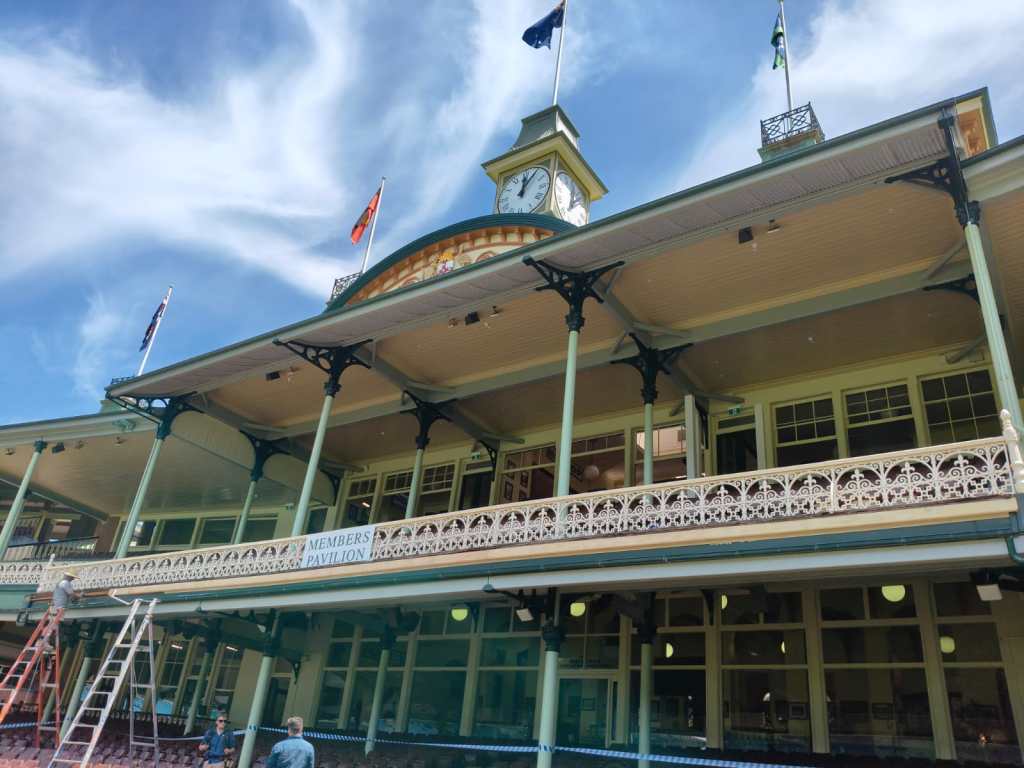
One of the first things that caught my attention was the architecture of the Members Pavilion. The building has a character that feels very different from the large, modern stadium structures we see around the world. Its clock tower, balconies, decorative railings, columns and traditional pavilion design give it a strong sense of history.
Walking past it, I found myself looking up as much as I was looking towards the field. The building feels like a link to an earlier era of cricket, when the pavilion was central to the match-day experience and the traditions surrounding the game were as important as the action itself.
The SCG has changed considerably over its long history, with modern stands and facilities added over the years. Yet these older structures remain an important part of its identity. They give the ground a personality of its own.
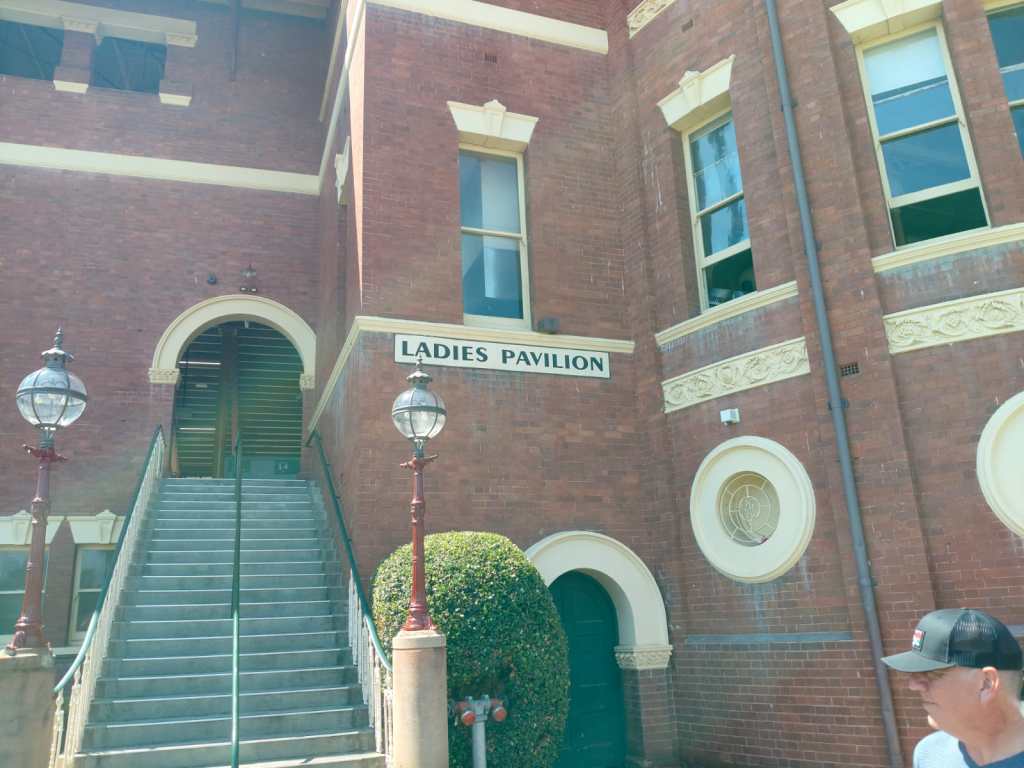
We also passed the Ladies Pavilion, another distinctive part of the historic precinct. Its brick exterior and traditional detailing stood out against the bright blue Sydney sky. These buildings are not merely decorative backdrops; they are part of the story of how the ground has evolved over generations.
I took several photographs of these buildings because they capture something that is difficult to convey in words. The SCG is both a working modern sporting venue and a place that still carries the atmosphere of cricket from another time.
The dressing rooms: imagining the players who have been here
For me, one of the biggest highlights was getting to see the players’ dressing-room areas.
There is something fascinating about a dressing room when you think about what happens inside it. Before a Test match, players spend hours preparing mentally and physically. They discuss tactics, study conditions, get ready to bat or bowl, and wait for their moment to walk out. Sometimes they return after a difficult session; sometimes they come back after producing a performance that will be remembered for decades.
The dressing rooms at the SCG have been part of that routine for countless players. Standing there, it was impossible not to think about the people who had occupied those spaces before us.
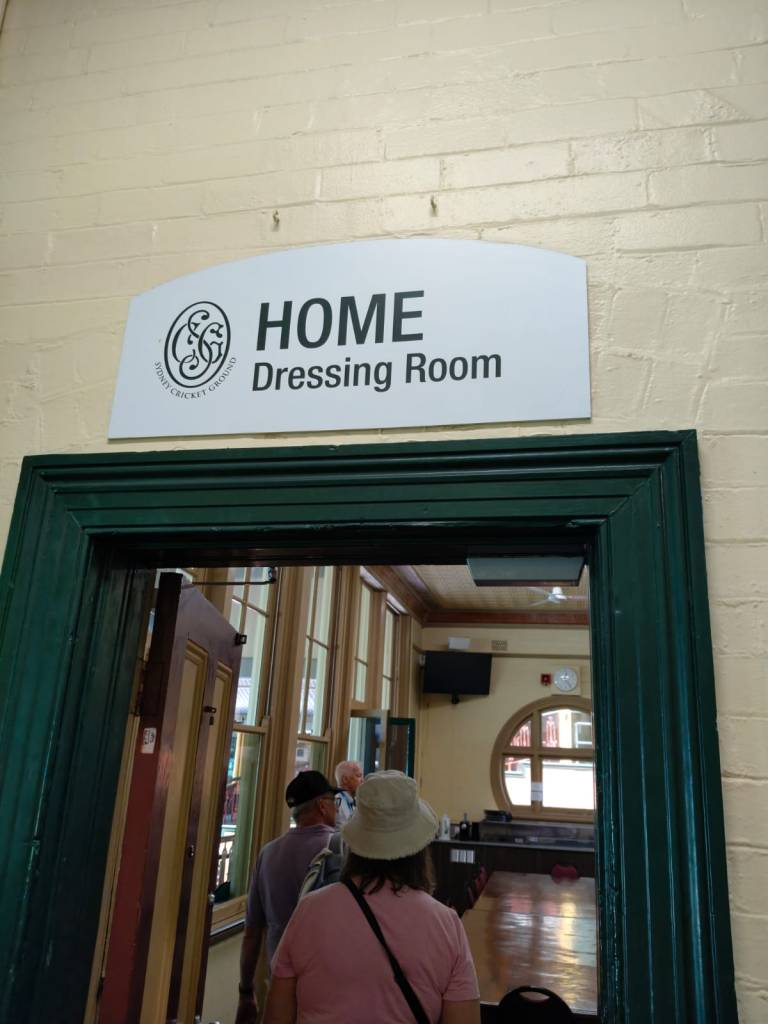
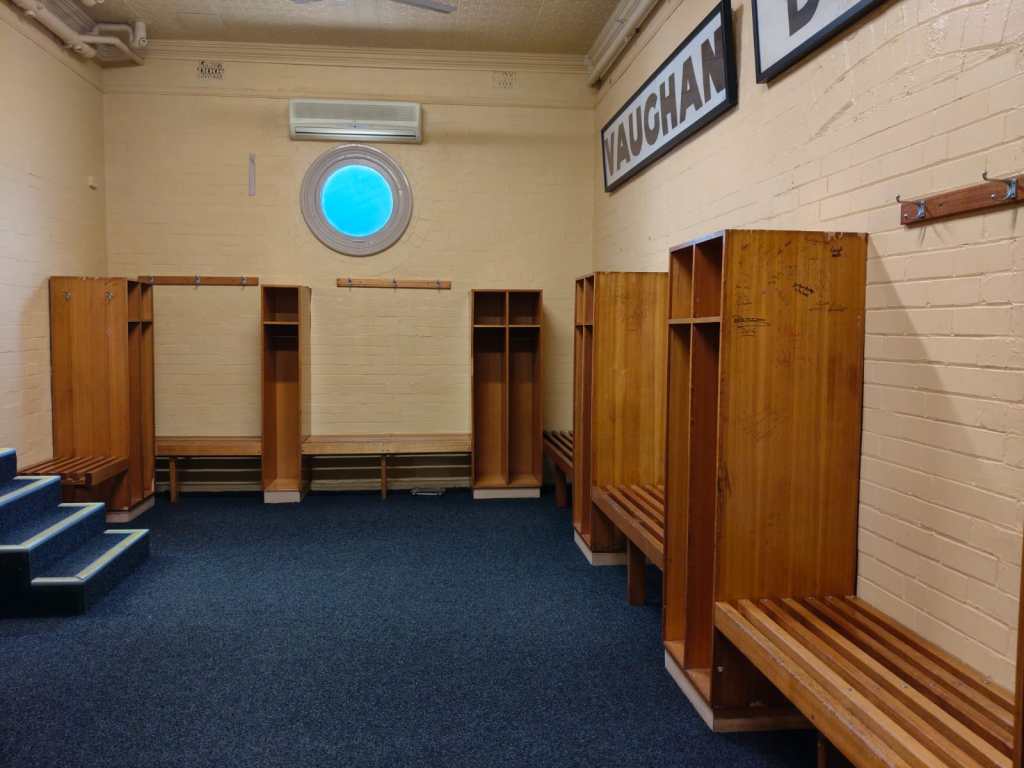
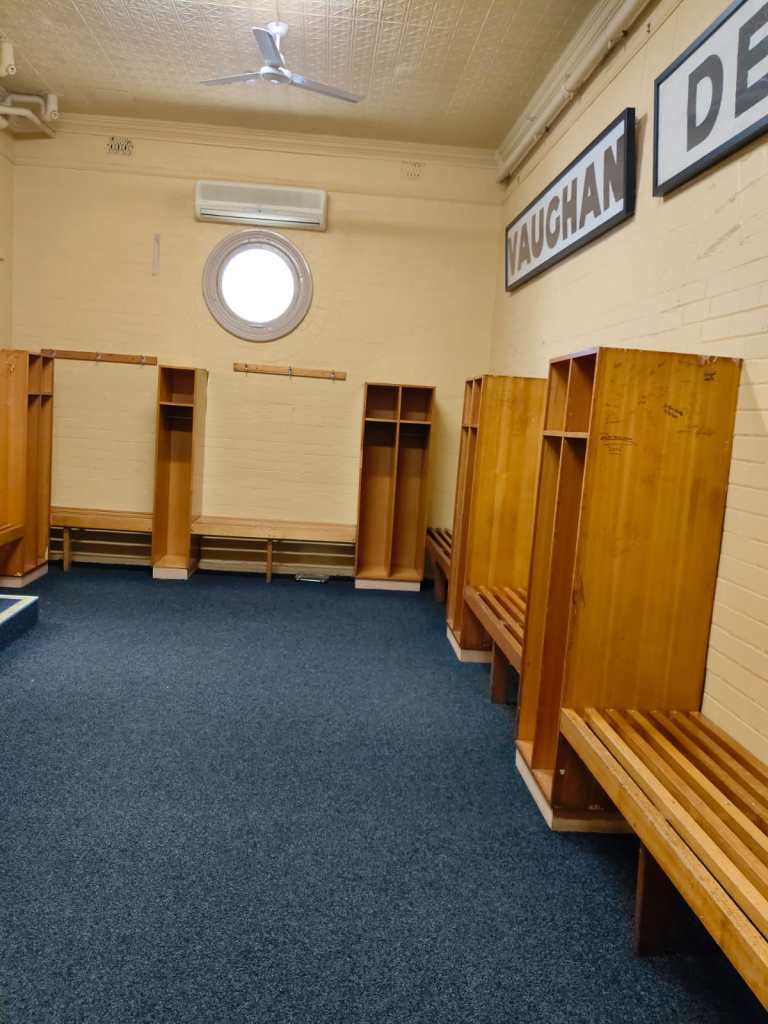
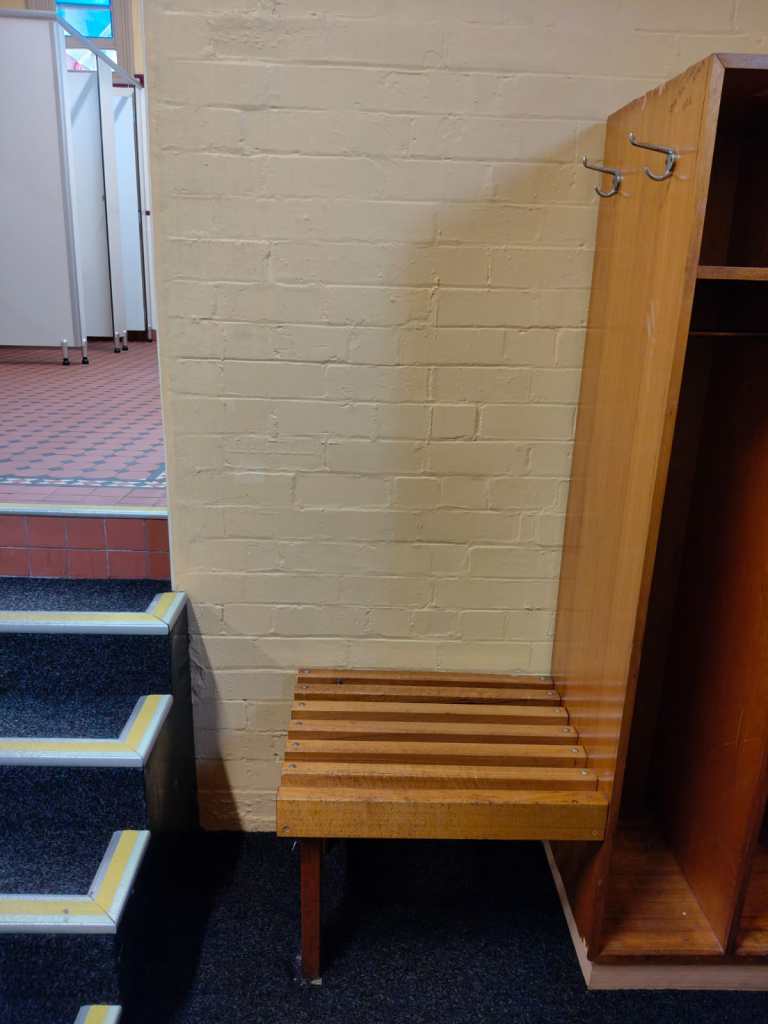
We saw the home dressing-room entrance and went inside to look around the room, with its wooden lockers, benches and familiar practical layout. It was not an elaborate or flashy space. It was a working room, designed for players to prepare and get on with the job.
That simplicity was part of its appeal. You could look at the lockers and benches and imagine the pre-match conversations, the quiet concentration before a big innings, and the changing moods of a team during a tense Test match. The room may look ordinary when empty, but its significance comes from the players who have used it.

I found myself slowing down and looking around rather than rushing to take the next photograph. For a cricket fanatic, every corner seems to invite a question. Who sat here before walking out to bat? What was going through a player’s mind before a crucial session? How many memorable performances began with someone sitting on one of these benches?
Of course, the dressing room cannot tell you all those stories on its own. That is where the guide adds so much value, explaining the history and sharing details that would be easy to miss if you were simply walking through the building.
It was one of those experiences where you do not need a spectacular attraction or a big interactive display. Just being allowed into the space is enough to get your imagination going.
Sachin Tendulkar, Brian Lara and a special connection with the SCG
As an Indian cricket fan, I was particularly looking forward to the parts of the tour connected with Sachin Tendulkar.
Sachin’s career is woven into the memories of an entire generation of cricket followers. For many of us, watching him bat was part of growing up. His performances were not just sporting events; they became shared memories, discussed at home, among friends and in offices for years afterwards.
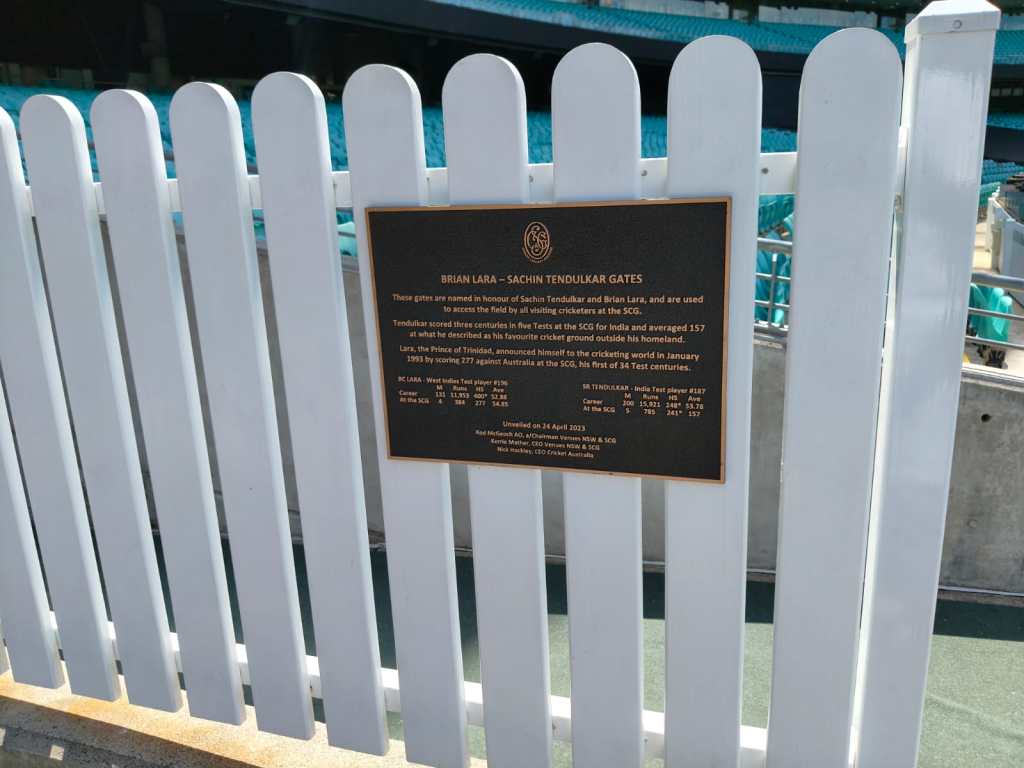
The SCG has a special place in his story. The ground’s own plaque at the Brian Lara–Sachin Tendulkar Gates records that Tendulkar scored three centuries in five Tests at the SCG and averaged 157 there. The same gates honour Brian Lara, another extraordinary batter whose career is closely associated with some of the greatest contests in international cricket.
The plaque explains that the gates are used by visiting cricketers to access the field. That makes the tribute particularly appropriate: these are not simply names displayed on a wall but players whose careers are connected with the ground itself.
During the tour, our guide also spoke about the place where Sachin reportedly preferred to sit when he played at the SCG. For someone who has followed his career for so many years, even a small detail like that makes the experience more personal.
It is one thing to watch a player on television, where the camera captures the innings and the crowd. It is quite another to stand in the place where that player spent time away from the field, preparing for the next session or thinking through the game.
I found myself trying to connect the physical space with the memories I already carried. I could picture the familiar walk out to the middle, the sound of the crowd, the bowler at the top of the run-up and Sachin settling into his stance. I have watched so much cricket over the years that these images come naturally. Being at the SCG made them feel closer.
There were moments during the tour when I genuinely had goosebumps. It might sound excessive to someone who does not follow cricket closely, but I suspect many cricket fans would understand exactly what I mean. When a place has been part of your sporting imagination for decades, seeing it in person can be surprisingly emotional.
Standing beside the playing field
Then came the chance to get close to the playing surface.
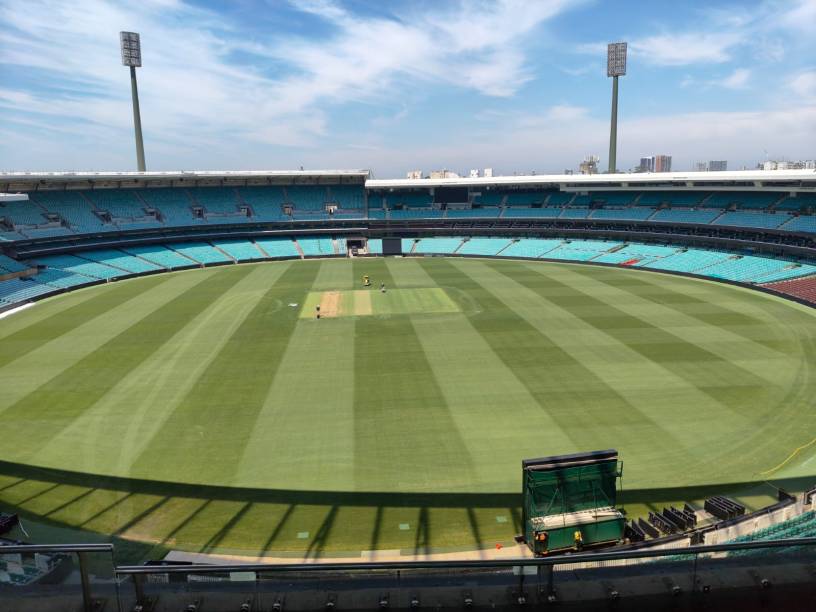
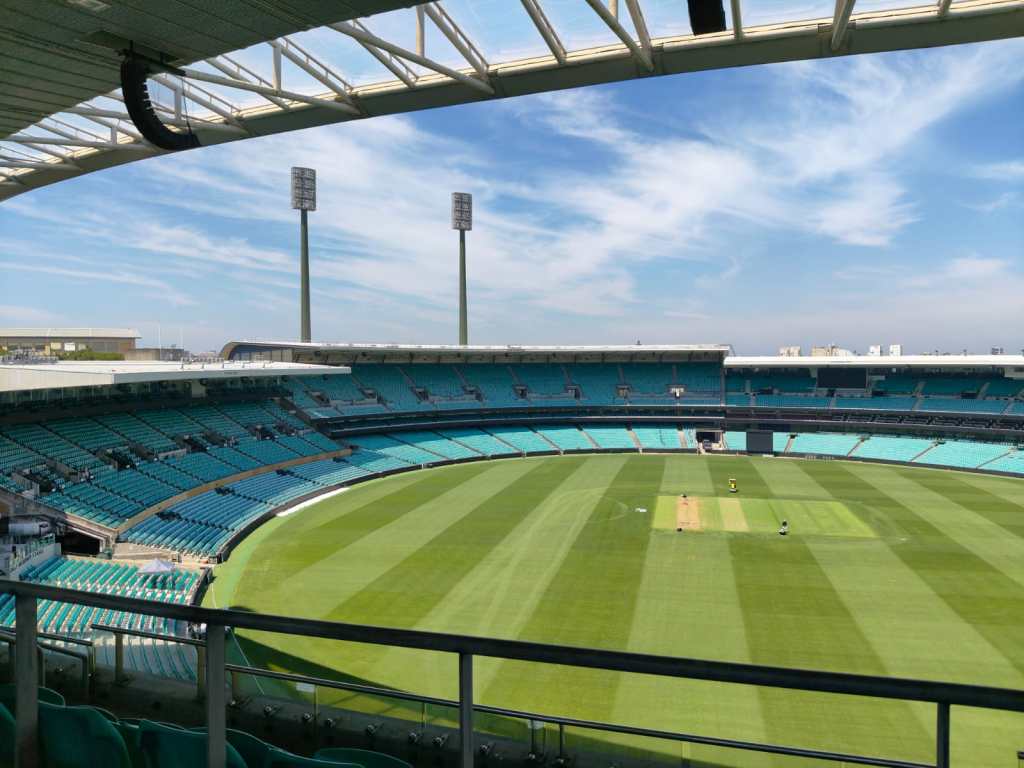
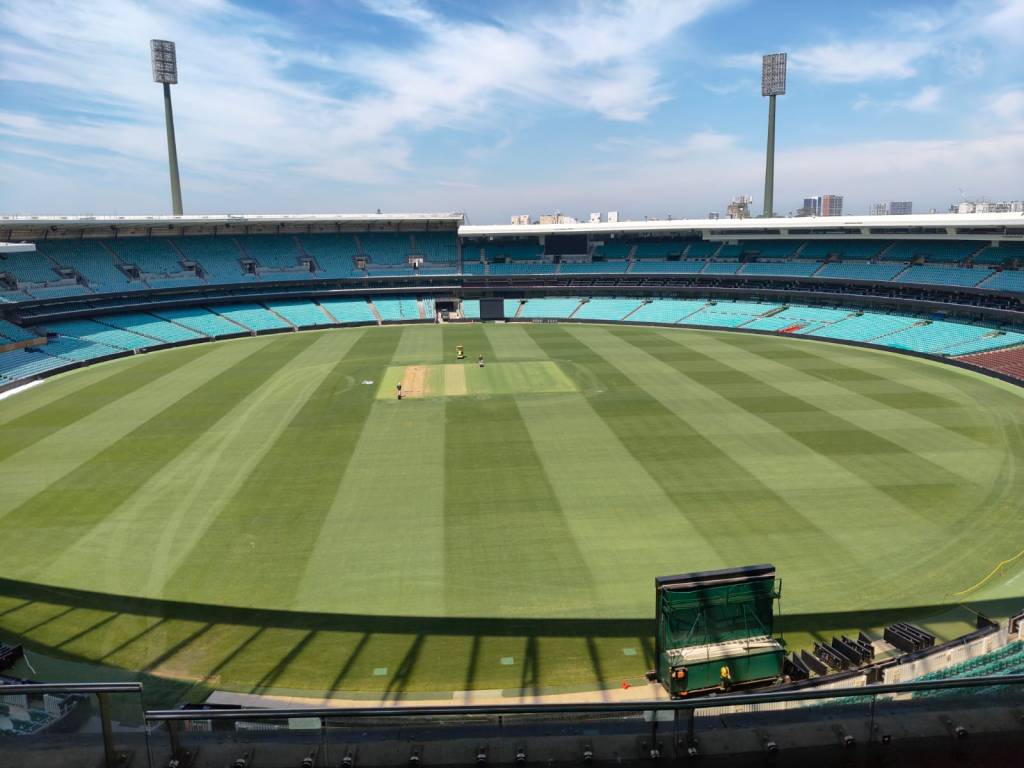
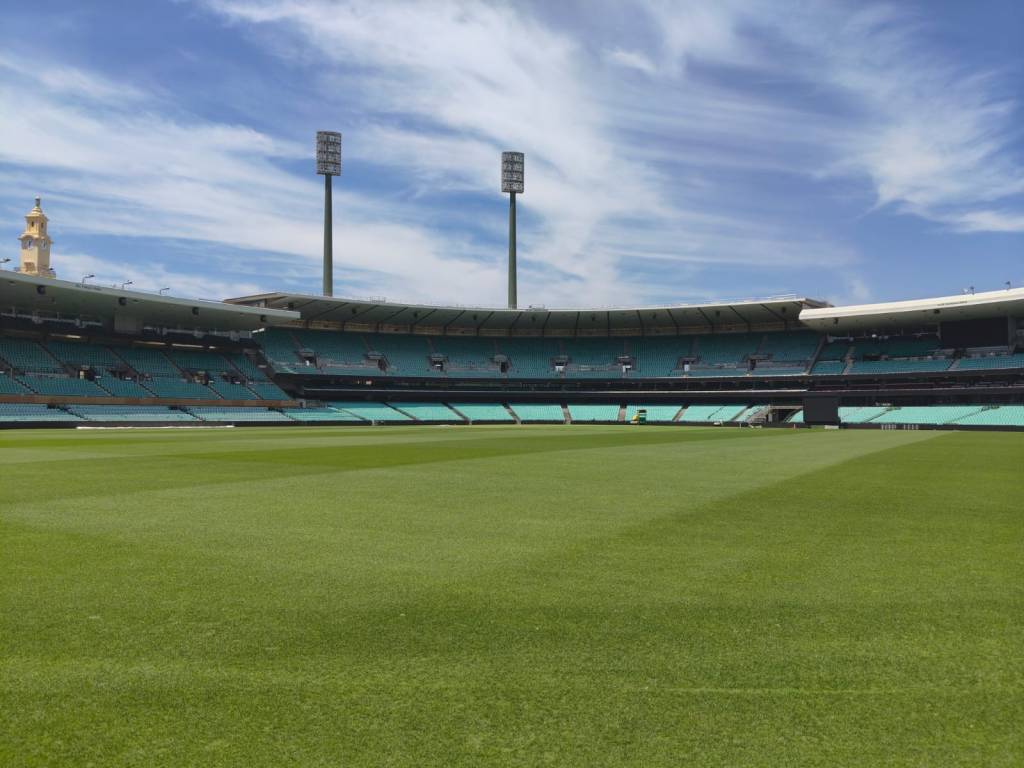
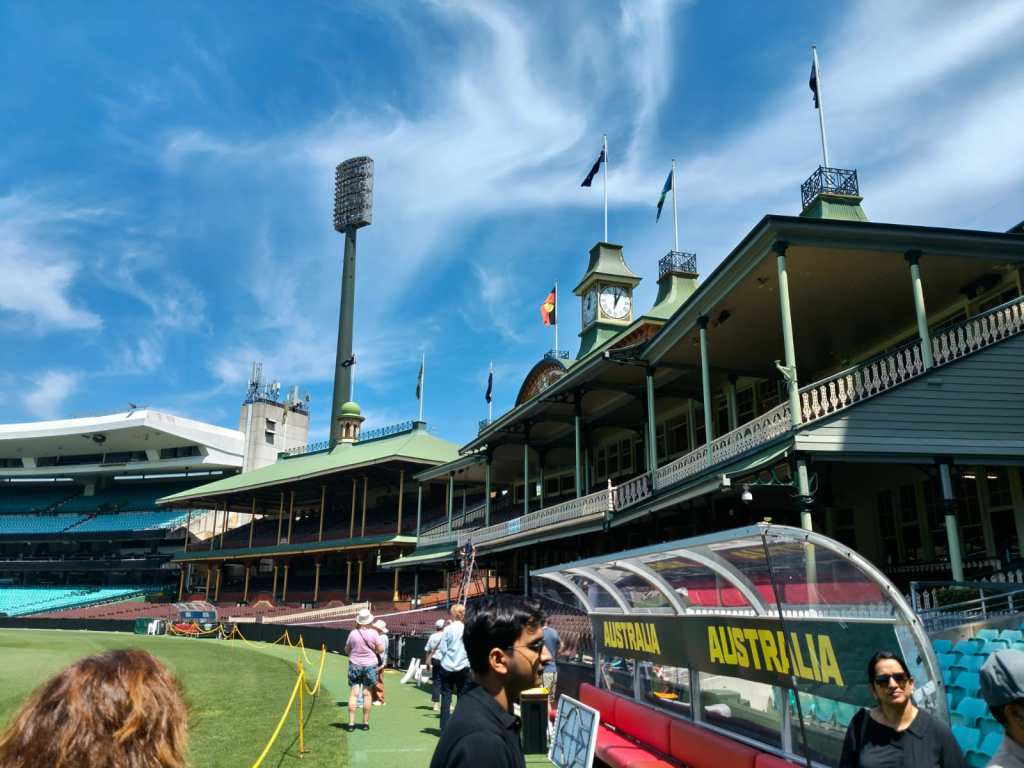
The SCG oval looks impressive from the stands, but being down near the field gives you a completely different perspective. You can see the curve of the boundary, the stands rising around the ground, the pavilions and the open sky above. The space feels much larger when you are standing near it rather than looking down from your seat.
I took a moment to look around and absorb it. This was the ground I had watched so many times on television. I had seen batters build long innings here, bowlers produce decisive spells, and teams fight through the pressure of a Test match. Now I was standing right there, taking it all in.
The field was beautifully green under the Sydney sun, and the contrast between the grass, the rows of coloured seats and the old pavilion buildings made for some wonderful photographs. It was also interesting to see the boundary area from the players’ perspective. On television, we tend to focus on the ball, the batter and the fielder. From close by, you become more aware of the layout of the ground and the distances involved.
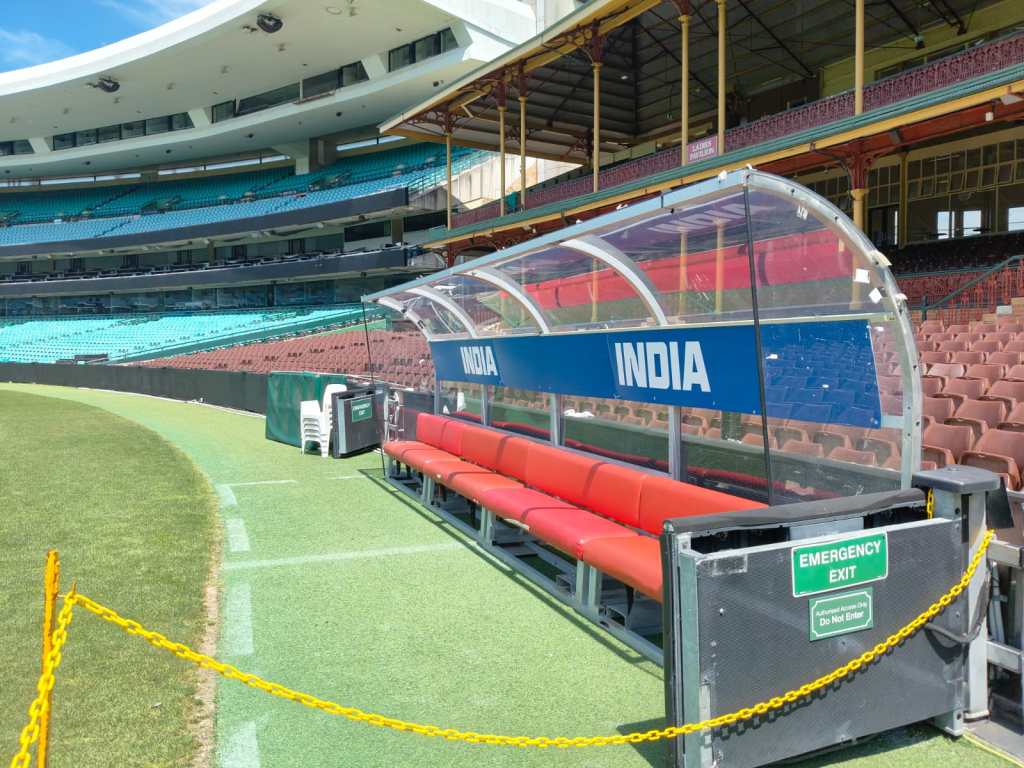
The team dugouts were another highlight. Seeing the seats marked for Australia and India made the international connection feel immediate. These are the places where players and support staff sit during a match, watching every delivery and reacting to the action. They may be familiar sights on television, but being close enough to see the details adds a new dimension.
I stood there thinking about the number of players who had occupied those seats, the conversations that might have taken place during a tense session, and the anticipation before a batter walked out to the middle.
For a cricket fan, even a simple photograph of an empty dugout can carry a story. The players were not there that day, but the setting made it easy to imagine a match unfolding around us.
The century boards: a wall full of cricket memories
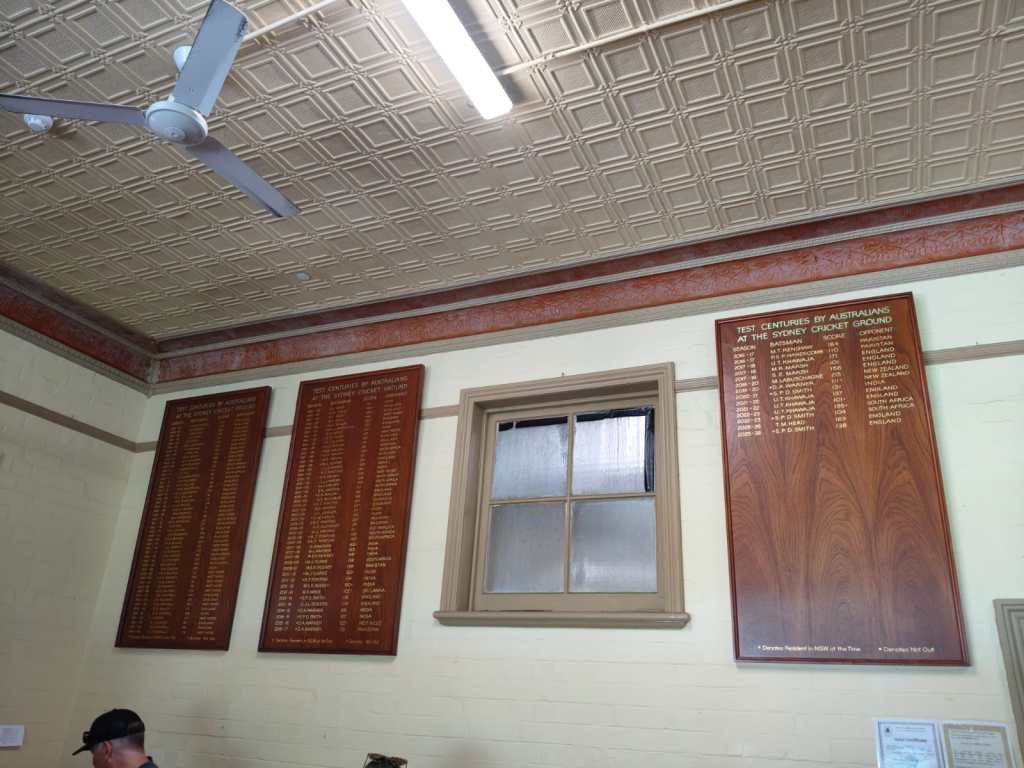
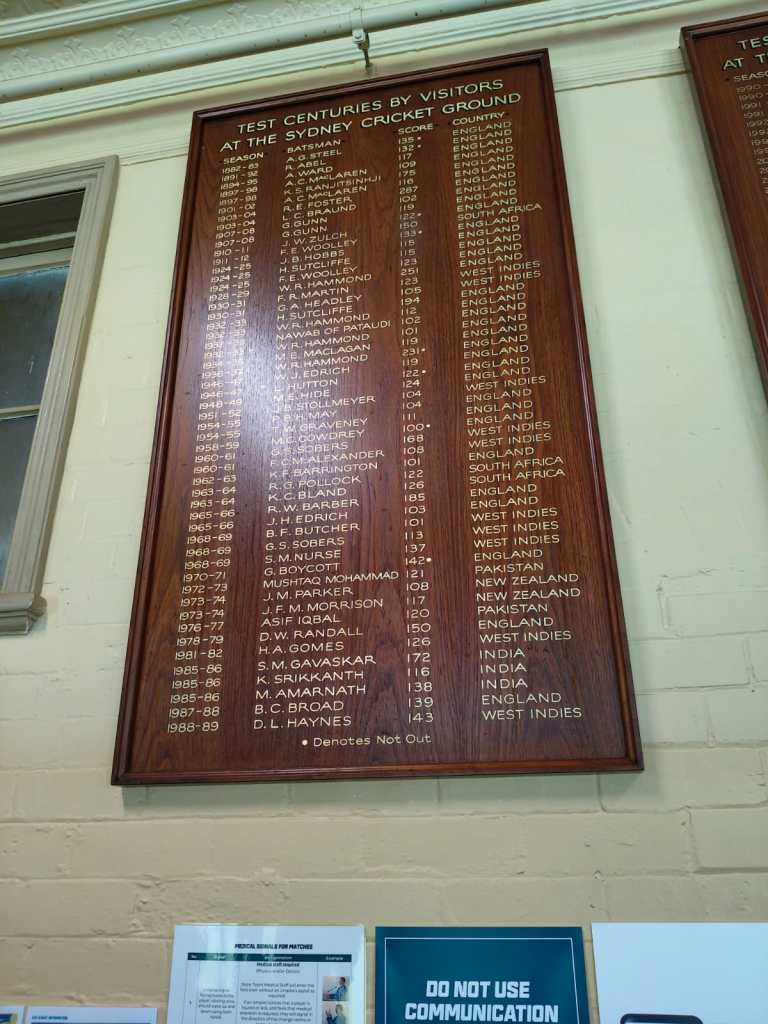
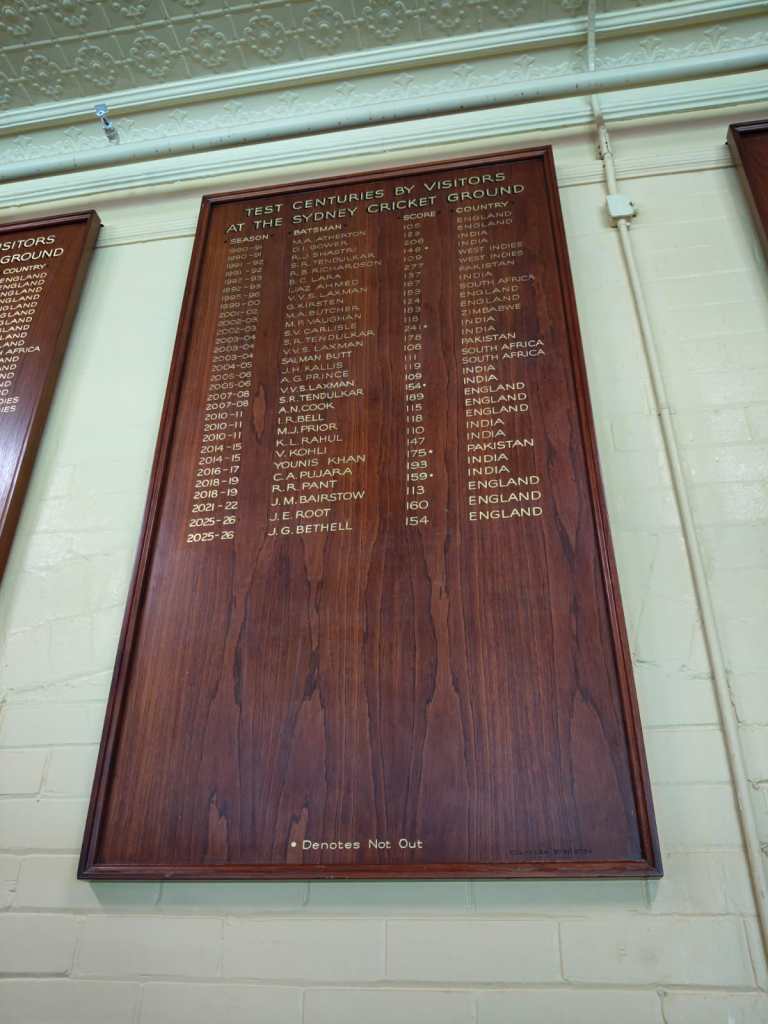
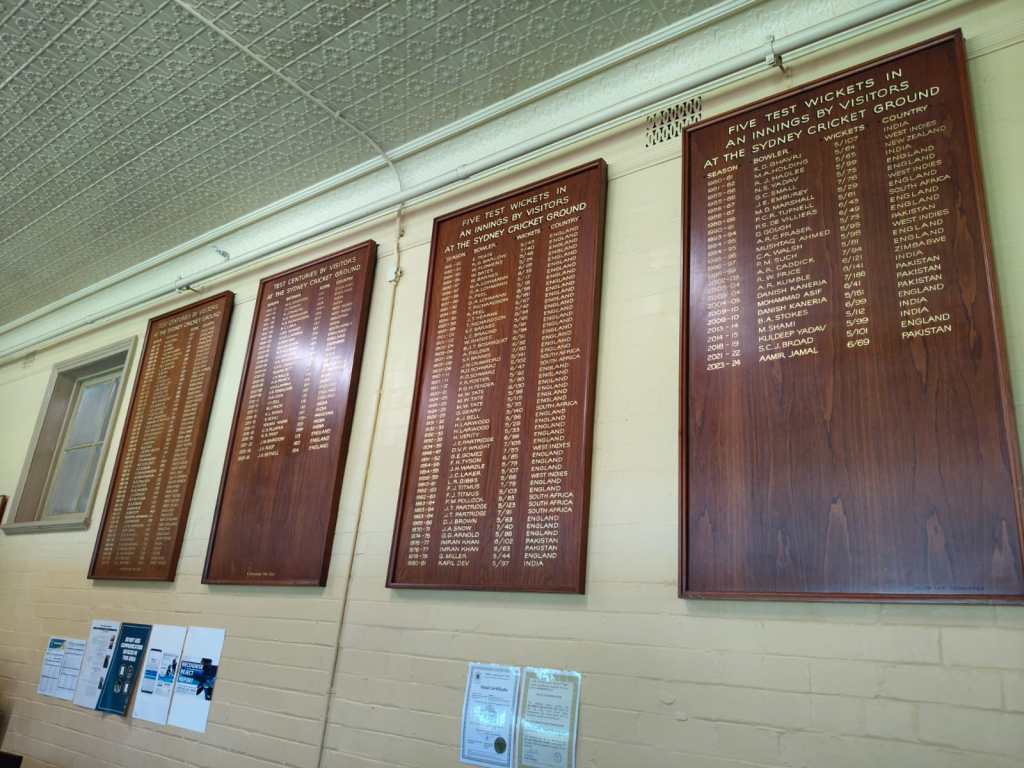
One of my favourite parts of the visit was seeing the historic boards that record Test centuries scored by visiting players at the SCG.
These wooden boards list batters, their scores, the seasons in which they achieved them and the countries they represented. They turn the walls into a record of generations of international cricket. Instead of reading a long list of statistics on a screen, you are standing in front of the names themselves, arranged in the ground where those innings took place.
For an Indian cricket fan, there are several familiar names to look for. Sunil Gavaskar appears among the earlier entries, while Sachin Tendulkar and Rahul Dravid feature in the more recent history. Virat Kohli is there too. The boards also recognise players from England, the West Indies, South Africa, Pakistan, New Zealand and other cricketing nations.
I spent time looking through the names and scores. It is easy to forget just how many great innings have been played at a ground over more than a century. A century is a significant achievement anywhere, but when it is recorded at a venue like the SCG, it becomes part of a much longer story.

What I liked most was how the boards brought different cricketing eras together. Players whose careers belonged to different decades were displayed in the same place, connected by the achievement of scoring a hundred at the SCG. Some names brought back vivid memories; others sent me thinking about matches I would have to revisit.
The boards also remind you that cricket history is not made only by the home team. The SCG belongs to Australian cricket, but its history has been shaped by visiting players who came from all over the world and produced performances that Australian supporters still remember.
That is part of what makes a great international ground special. It becomes a stage on which different countries create shared sporting history.
Scorecards and the details behind the game
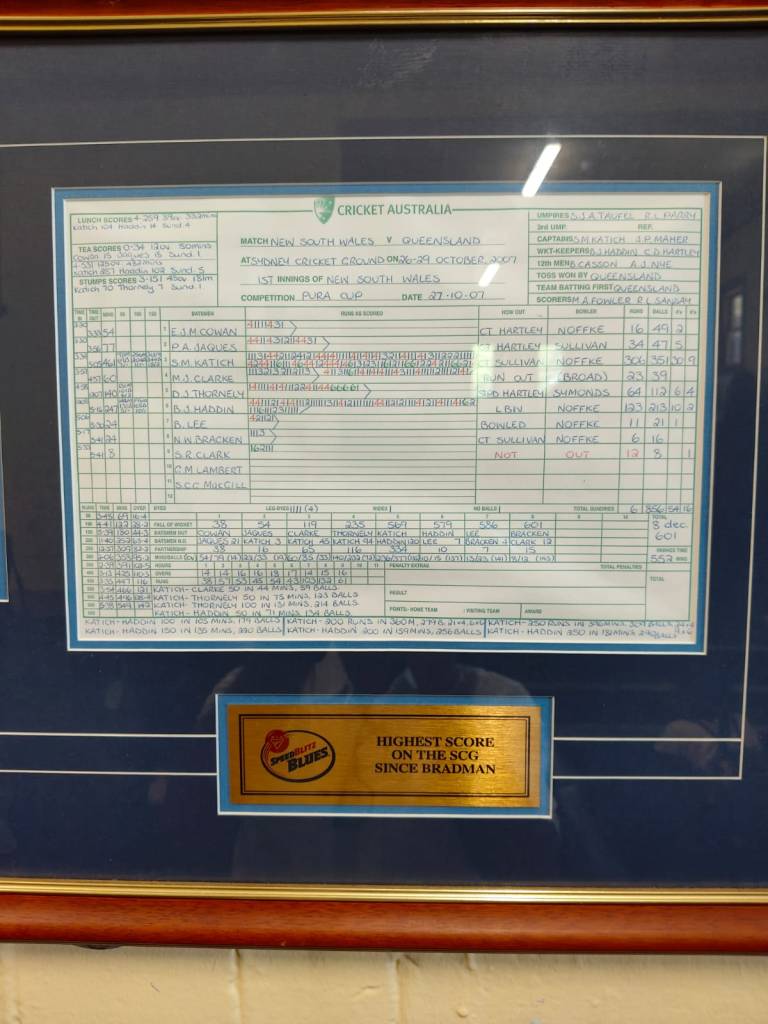
Another display that caught my attention was a framed scorecard from a New South Wales versus Queensland match played at the SCG in October 2007. The accompanying plaque identifies the performance as the highest score on the SCG since Bradman.
The scorecard records the match in the traditional way, with the batters’ names, runs, balls faced, dismissals and bowling figures. For anyone who has spent years reading scorecards, there is something satisfying about seeing one preserved and displayed like this.
A scorecard compresses an entire innings into numbers and symbols, but those numbers represent hours of concentration, partnerships, tactical decisions and moments that can change the direction of a match. You can look at the figures and begin to reconstruct how the innings unfolded.
The SCG displays also include boards recording five-wicket hauls by visiting bowlers. These are a reminder that bowlers have their own place in the ground’s history. Cricket memories often centre on centuries, but a five-wicket haul can be just as decisive, especially in a Test match where a spell can change the course of a series.


I liked these displays because they went beyond the most famous names. They showed the depth of cricket history at the ground, including domestic matches and performances that might not be as widely remembered outside Australia.
There was also a handwritten piece of cricket memorabilia among the items we saw. Details like that give the exhibits a human quality. They are not just official records prepared for a museum; they are traces of the people who played the game and the moments they left behind.
The Richie Benaud Media Centre
The next major highlight was the Richie Benaud Media Centre.
Richie Benaud occupies a special place in cricket history, not only as an Australian captain and player but also as one of the most respected voices in cricket commentary. For generations of viewers, his voice became part of the experience of watching the game. His calm delivery and deep understanding of cricket made him much more than a commentator.
Seeing the media centre named in his honour felt appropriate. Cricket is experienced differently by players, spectators and the people who describe it to millions watching around the world. The media centre is where much of that broadcast work happens, with commentators and journalists watching the action and explaining it to audiences.
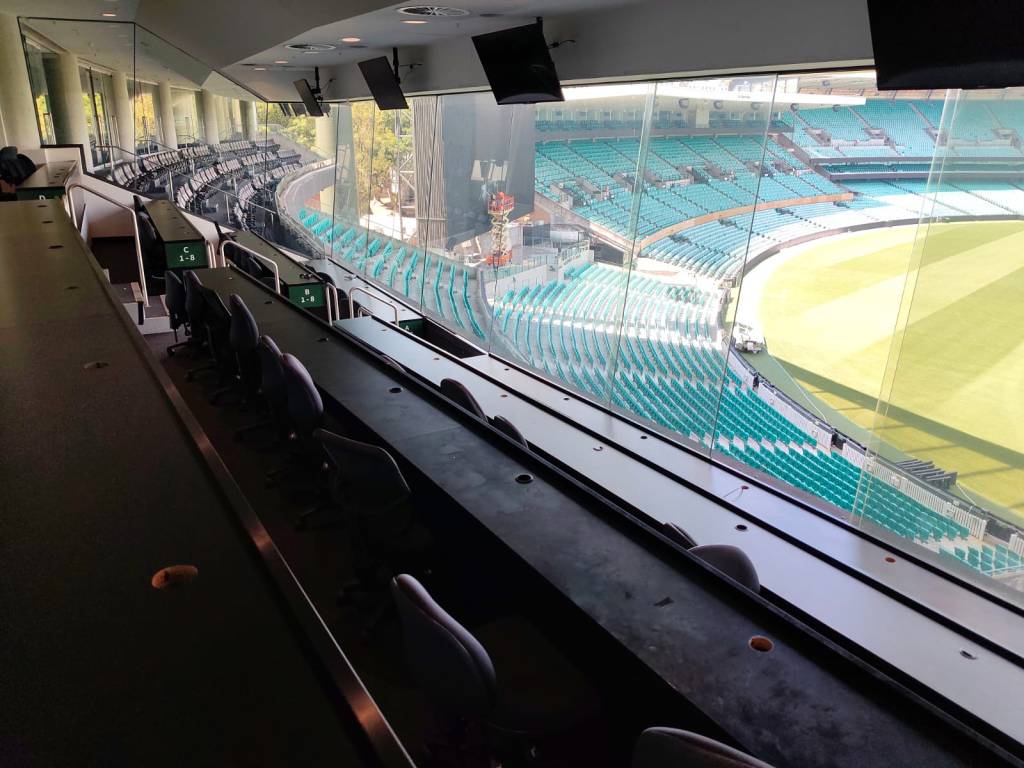
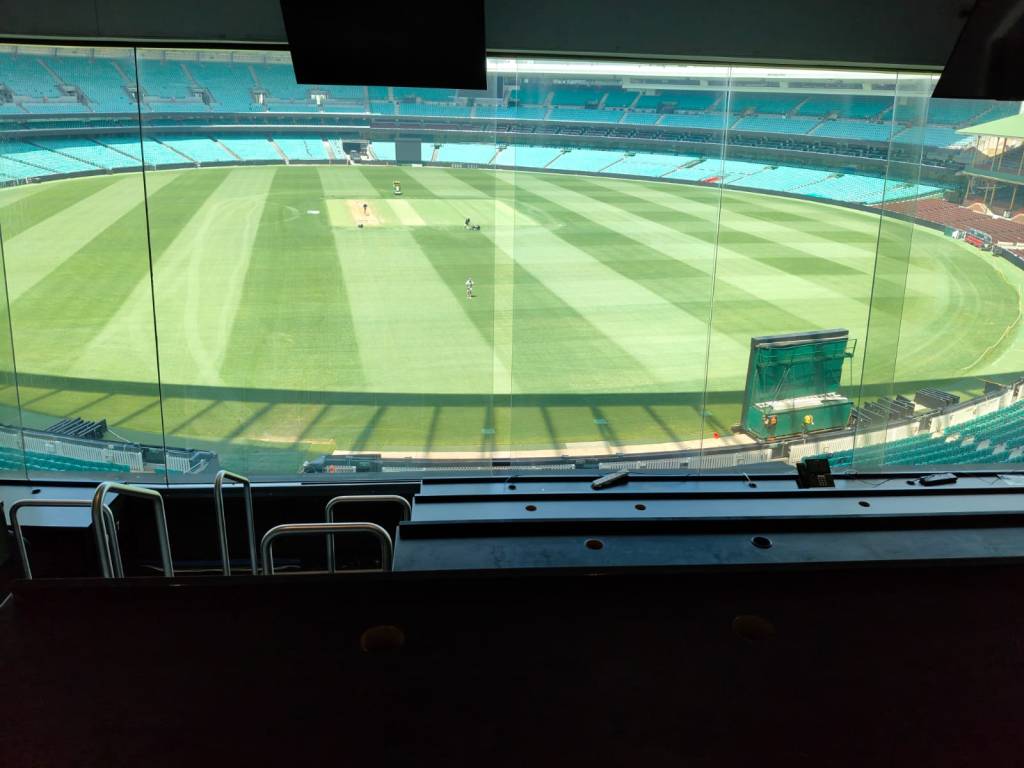
We were able to see the media facilities and the views from inside the building. Looking out across the ground from that perspective, I could imagine the commentary teams describing a close finish or a batter approaching a major milestone. The view also gives you a sense of how the entire ground fits together, with the playing area at the centre and the stands curving around it.

The rooms themselves were practical working spaces, with tables, seats and large windows looking out onto the oval. There was something fascinating about seeing the ground from the place where the action is observed and described to people who may be thousands of kilometres away.
For someone who has spent years watching cricket on television, this was another moment when the familiar broadcast experience connected with a real place. I had seen the SCG through television cameras many times. Now I was standing in one of the spaces from which those images are watched and discussed.
The tour made it clear that a cricket ground is much more than the pitch and the stands. There are people working behind the scenes to make a match happen, to cover it, and to preserve its records. Seeing the media centre gave me a better appreciation of that side of the game.
The Walk of Honour and the legends of the SCG
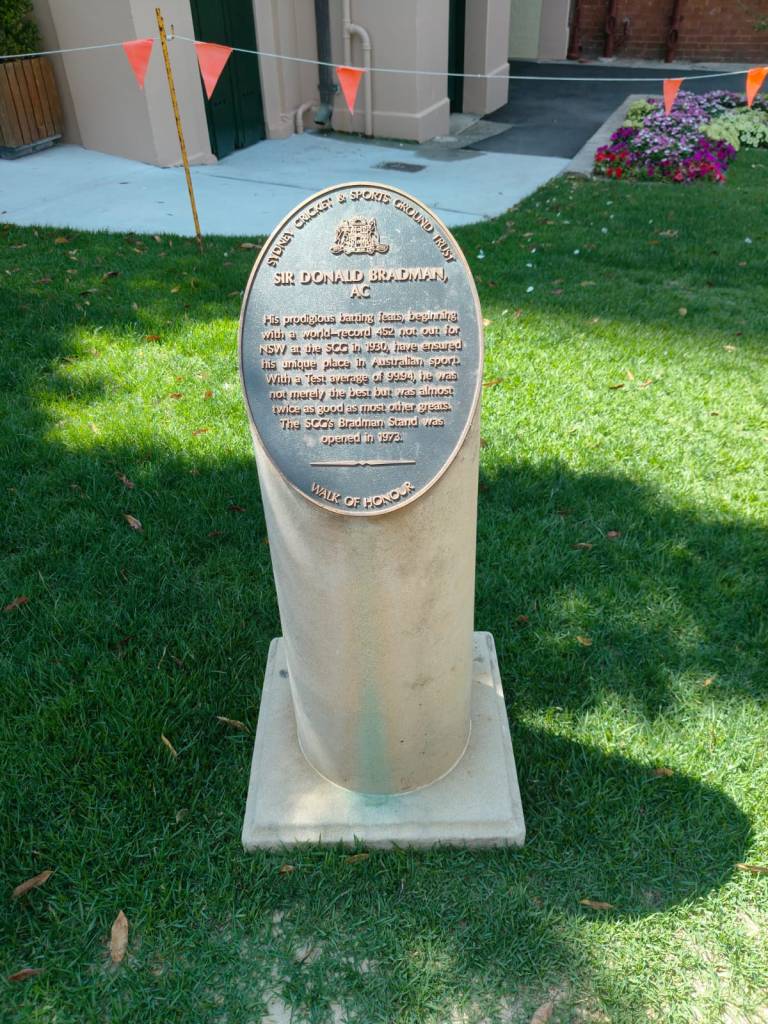
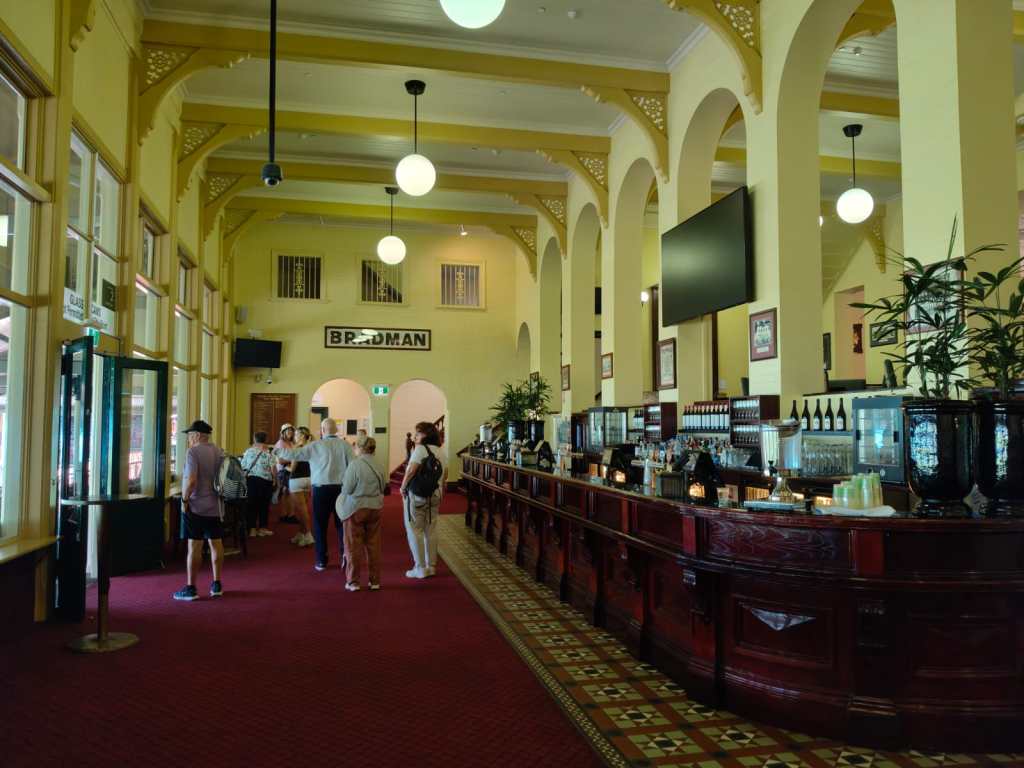
As we moved through the precinct, we also came across the Walk of Honour, which celebrates sporting champions associated with the SCG. One of the plaques honours Sir Donald Bradman, a name that carries enormous weight in the history of cricket.
Bradman is often spoken of in almost mythical terms, and his achievements continue to shape how people discuss batting greatness. Seeing his name honoured at the SCG was a reminder of how deeply the ground is connected with Australia’s cricketing identity.
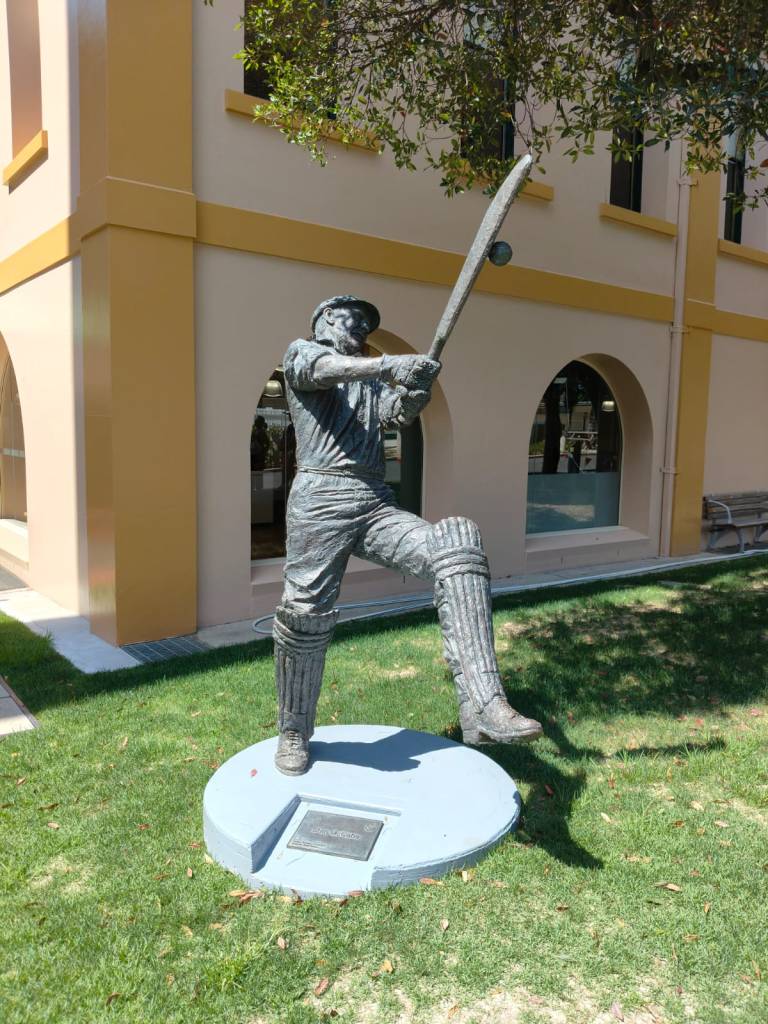
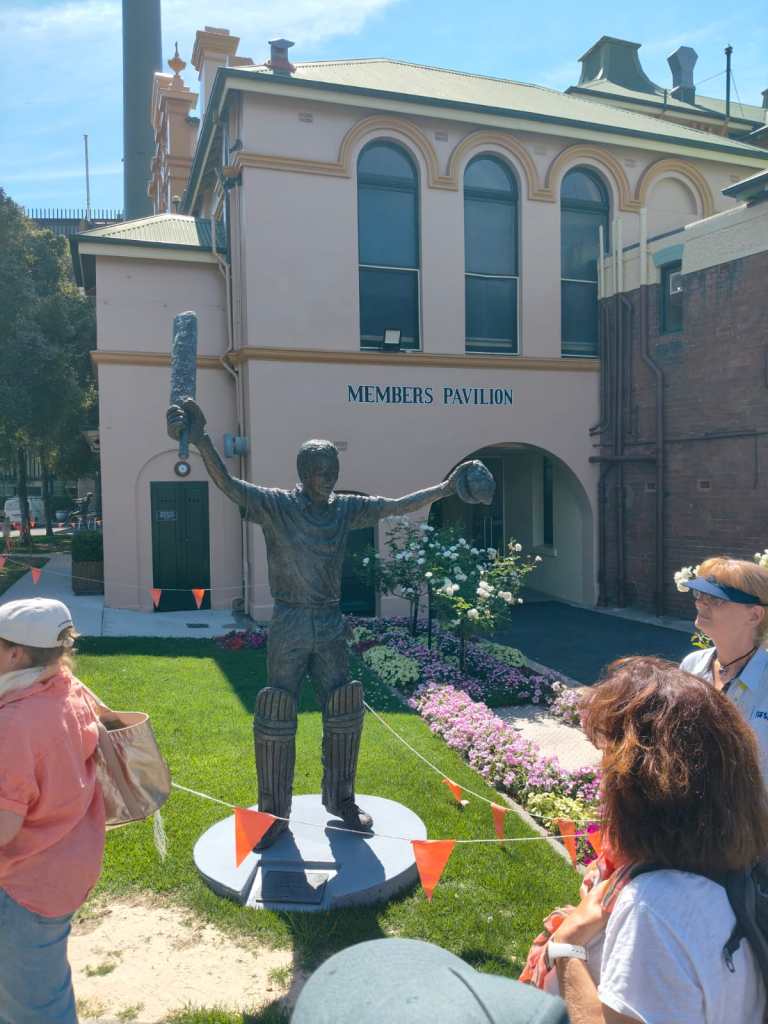
The precinct also features statues and tributes to sporting figures. Some of the statues are immediately recognisable, while others invite you to stop and read the plaque to learn more about the person being honoured. I photographed one of the batsman statues, although I could not clearly establish the name from the plaque in my photograph, so I would rather not guess.
I liked the way these tributes were woven into the walk around the ground. They did not feel like a separate attraction that you had to visit and then leave behind. Instead, they were part of the experience of moving through the SCG, with cricket history appearing in the buildings, along the walkways and in the spaces used by players and spectators.
The museum: preserving more than just cricket
The SCG Museum added another dimension to the tour. The museum preserves sporting objects, documents and memorabilia associated with the ground and the wider sporting history of the precinct. Its collection includes items connected with cricket legends such as Victor Trumper, Don Bradman and Steve Waugh, as well as bats, caps, photographs and other historical objects. The NSW Government’s museum page provides an overview of the collection.
We saw displays of cricket memorabilia, including equipment and items associated with different eras of the game. One display featured historic team shirts from countries including England, Pakistan, India, South Africa, Australia and New Zealand. Seeing them together was a simple but effective way of showing how international cricket has brought different teams and traditions to the same ground.
There were also displays connected with major milestones and Test cricket. One item commemorated the Australia versus India Test at the SCG in January 2012, marking the occasion of 100 Tests between the two countries. For an Indian fan, that rivalry has produced so many memorable moments that even a small piece of memorabilia can trigger a chain of memories.

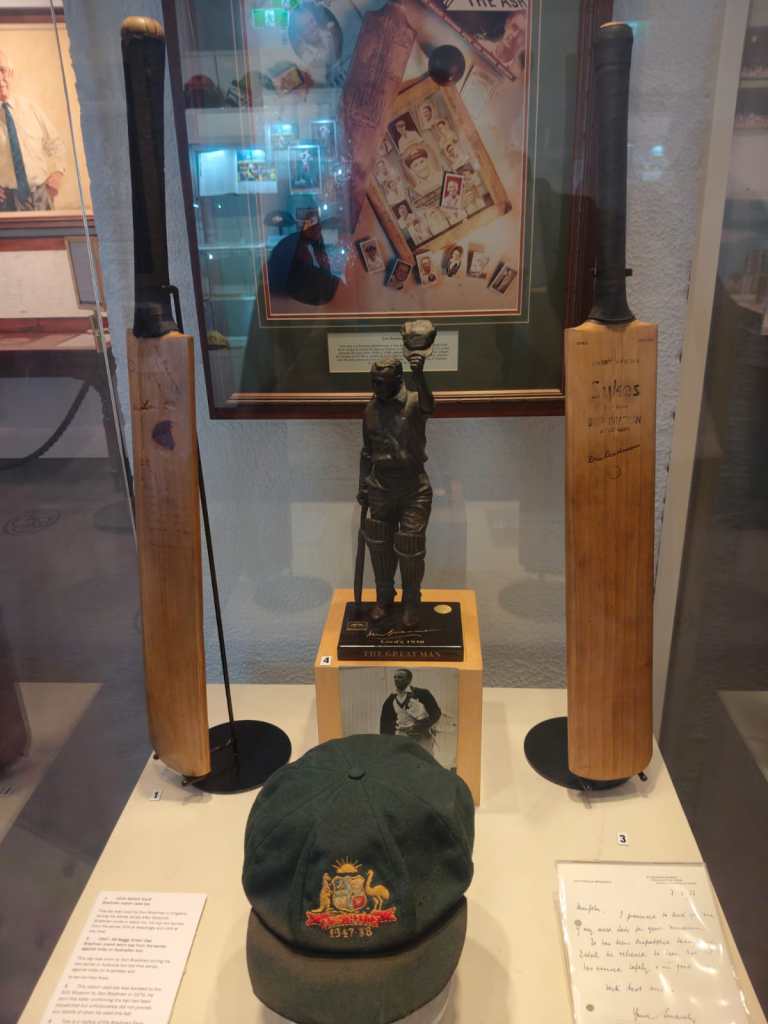

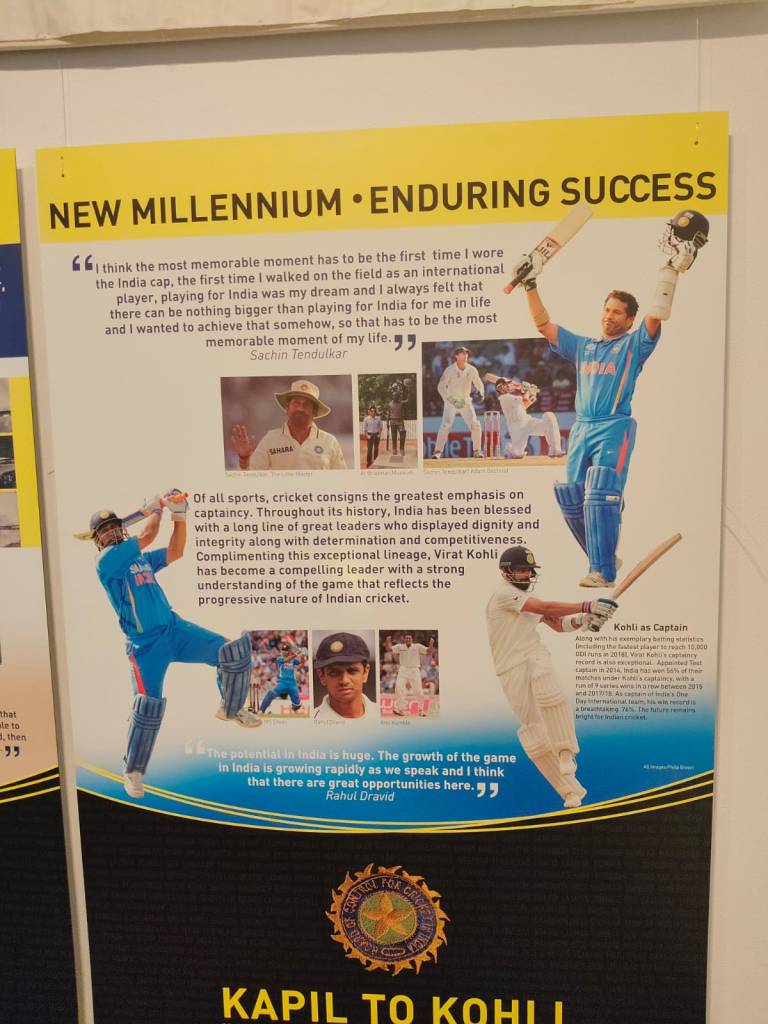
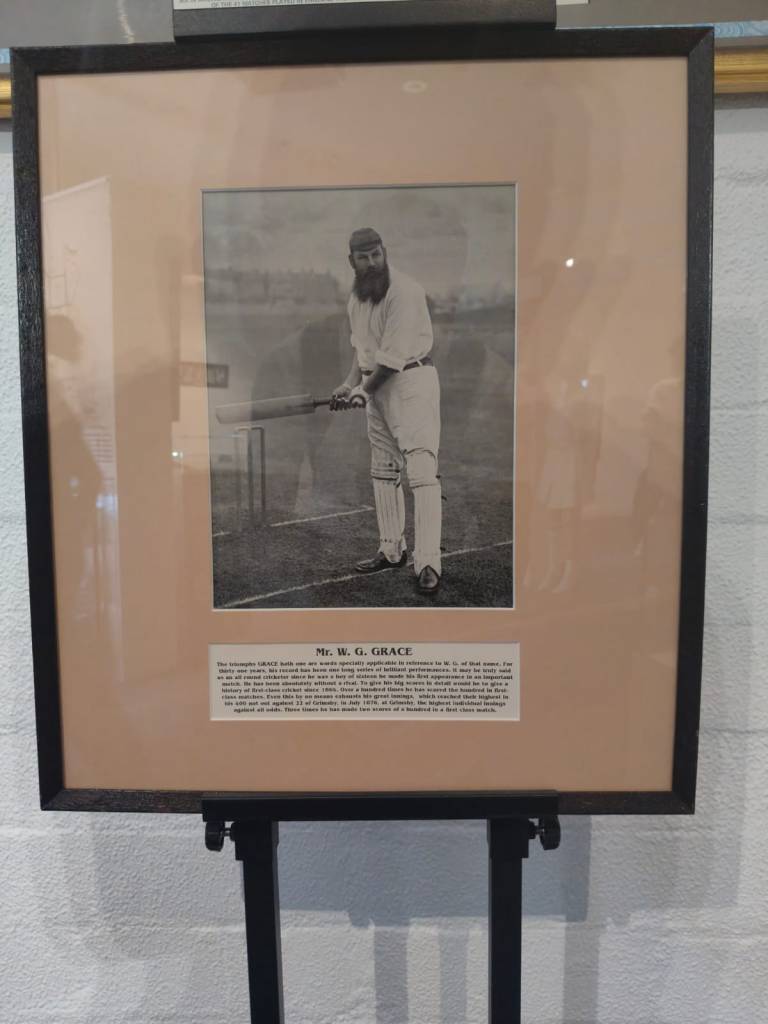
What I appreciated about the museum was the way it preserved the stories behind the sport. The game is constantly moving forward, with new players, new formats and new records. It is easy to forget what came before. Museums like this create a place where earlier generations remain visible and where younger visitors can begin to understand the history behind the names they hear today.
For me, the museum was not just a collection of objects. It was another opportunity to connect the players I had watched during my lifetime with the much longer story of cricket in Australia.
Sharing the experience with my daughter
Although much of the visit was driven by my own love of cricket, taking my daughter along made the day more meaningful.
At eleven, she is at an age where travel can introduce her to things she might not otherwise seek out herself. A cricket ground may not immediately mean the same thing to her that it does to someone who has followed the sport for decades. But she could still experience the atmosphere, see the spaces where international players prepare and learn about the history of a famous sporting venue.
I enjoyed watching her take in the different parts of the tour, from walking through the pavilions to seeing the dressing rooms and looking out over the field. It was a chance to share a little of my world with her without turning the day into a lecture about cricket.
There is also something special about being able to say that you stood on the ground together. Years from now, she may remember the architecture, the sunny day, the people we met or simply the fact that we did something different together in Sydney. I hope she remembers the experience, even if she does not remember every player or statistic.
For me, that is one of the joys of travelling with children. You plan a visit because you are interested in something, but the memories that matter most often come from sharing it with them.
A sporting precinct beyond the cricket ground
As we moved around the SCG precinct, the surrounding sporting fields and open spaces became part of the experience too. The area around Moore Park is home to several sporting facilities, and you can see people using the grounds for training and other activities.
The photographs I took outside the stadium show the open fields, trees and pathways around the precinct. They offer a contrast to the enclosed atmosphere of the stands and the historic pavilion buildings. The SCG may be the centrepiece of this visit for a cricket fan, but it sits within a much broader sporting environment.
The stadium itself also reflects the way sport has changed. Alongside the older pavilions are modern structures, large seating areas, media facilities and the infrastructure needed to host major events. That mix of old and new is part of the SCG’s character. It is not a preserved relic; it is a living venue that continues to host sport while carrying its history with it.

Is the SCG tour worth doing?
For a cricket fan, I would say yes without hesitation.
The guided tour is what makes the visit worthwhile. You can appreciate the exterior of the stadium and its architecture on your own, but the chance to enter the dressing-room areas, get close to the field, visit the historic Members Reserve and see the media facilities gives you a much richer experience. The guide’s stories also help connect the buildings and displays to the players and matches that made the ground famous.
The official SCG tour includes behind-the-scenes access to areas such as the playing field, players’ dressing rooms, historic Members Reserve, the Brian Lara–Sachin Tendulkar Gates, the Richie Benaud Media Centre and the SCG Museum. Access and the route can vary depending on stadium activities. See the official tour highlights here.
For planning purposes, current listings show a 60-minute tour starting at around A$30 for adults and A$20 for children, while the longer guided walking tour is listed from around A$35 for adults and A$24 for children. These are current advertised starting prices, not necessarily the prices we paid in February 2026, and they may change. Check the official tour booking page before visiting.
The tour involves walking through the precinct, and some sections are outdoors. Comfortable shoes, a hat and sunscreen are sensible choices on a sunny Sydney day. It is also worth checking the available route and tour schedule in advance, since access can change when the stadium is being used for events.
Even if you are travelling with someone who is not a huge cricket follower, the tour offers a look at an important part of Sydney’s sporting history. But if, like me, you have spent decades watching international cricket, the experience goes well beyond ordinary sightseeing.
My verdict: more than just a stadium tour
Looking back, what I remember most is not any single room or photograph. It is the feeling of being inside a place that had been part of my cricketing life for so long.
I remember the conversations with the Australian and English families, and how quickly cricket gave us something to talk about. I remember looking at the century boards and recognising names from different eras. I remember the dressing room, the media centre and the view across the green oval. And I remember the feeling of standing close to the field and thinking about all the great players who had played there.
For nearly four decades, I had known the SCG through television, scorecards, newspaper reports and cricket conversations. Visiting in person brought those separate memories together. The ground was no longer just the setting for a match I was watching from home. It was a place I had walked through, explored and experienced with my daughter.
Some travel experiences are enjoyable because you see something beautiful. Others are memorable because you learn something new. This visit was special because it connected a personal passion with a real place and gave me the chance to share it with someone I love.
Every part of the tour felt like gold to a cricket fanatic. I left with plenty of photographs, a deeper appreciation of the SCG’s history and a set of memories that will stay with me for a long time.
If you love cricket, put the Sydney Cricket Ground tour on your list when you visit Sydney. And if you have the chance to share it with your child, even better. You might be walking through cricket history, but you will also be making a little history of your own.
Planning a visit to the Sydney Cricket Ground
Getting there: From Circular Quay, take the light rail towards Moore Park and walk from the Moore Park stop to the SCG precinct.
What to see: The playing field, players’ dressing rooms, Members Pavilion and historic Members Reserve, Brian Lara–Sachin Tendulkar Gates, Richie Benaud Media Centre, Walk of Honour and SCG Museum. The exact route depends on stadium activities.
Tour tickets: Check the official SCG tour booking page for current tour options, timings and prices.
Allow time for: The guided tour itself, photographs, the museum and a little time to explore the surrounding precinct.
Best for: Cricket fans, sports-history enthusiasts and families looking for a different kind of Sydney experience.
This post describes our visit in February 2026. Tour routes, access and ticket prices can change, so confirm the latest details before travelling.

